
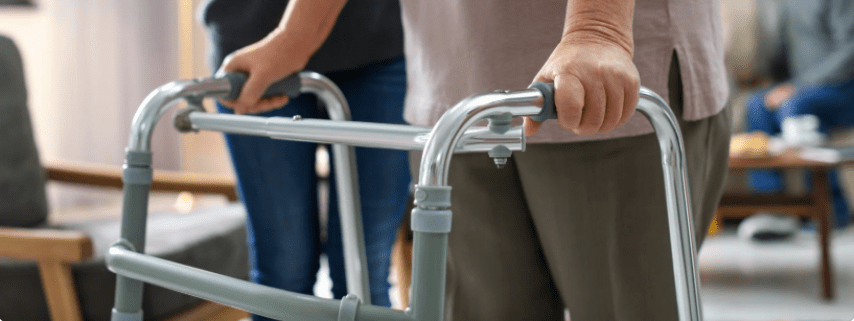
Home Accessibility Tips For Mobility Aids
As our loved ones age, mobility aids and devices are often used to help them maintain their independence and manage pain from health conditions or injury rehabilitation. However, not all homes have the means to support all types of mobility aids. Some—like boots, casts, and canes—are small, kept close to the body, and relatively small. However, other devices—like crutches, wheelchairs, or scooters—require more room and special accessibility features to get to where your loved one wants to go. While ramps, elevators, and railings can be found on and inside public buildings, most homes are not built with that type of accessibility in mind.
Construction-Free Ways to Accommodate Mobility Aid Devices in Homes (Renter Friendly)
Sometimes, rebuilding parts of our homes or making any permanent changes to accommodate mobility aid devices is unattainable. Other times, your loved one might not need the aid for very long, so permanent changes don’t make sense. But, for as long as your loved one needs a device that is not supported by the architecture of their home, you still have options to help them adapt to the life change.
- Keep Things Clean. One of the simplest ways to help your loved one is to declutter. Move any tripping hazards, create more open space, and move any fragile items out of the way to avoid accidental bumps, scuffs, and breakage while everyone adjusts.
- Replace the Shower Head. Tubs and showers are very confined places that don’t allow for much movement. You can help your loved one stay clean by installing a longer hose and a hand-held shower head that is easier to move than a body is and can reach someone who is sitting down. Additionally, having a pause function on the shower head and getting a suction cup shower head holder have proven to be very helpful as well.
- Invest in Reliable Shower Mats. A sturdy threshold or transition mat outside of the shower, as well as a textured mat inside the shower or bath can provide much needed traction for both mobility aids and bare feet. Slipping hazards become more prominent as your loved one ages, so having traction available anywhere that may be wet or slippery is important for fall prevention.
- Get Slip-In Bed Rails. Bed rails are helpful for getting in and out of beds without needing much construction. Unlike free-standing rails that need to be properly installed with tools and anchors, most bed rails use the weight of the mattress to keep it stable, which eliminates the need for any construction.
- Rent or Buy Portable Ramps. Stairs might not be attainable for some people, especially in a wheelchair. You can rent or buy portable ramps for front door steps or a stoop that
- Fasten Rugs Down. Area rugs, desk chair mats, and other decorative floor coverings don’t need to go away completely with a mobility device. However, they do need to be fastened to the floor to prevent tripping or tangling. Double-sided tape is a great temporary fasten the edges and sides of rugs down.
- Offer Additional Ways to Communicate. In order to maintain a sense of independence, being able to leave your loved one to themselves is important. But, it’s just as important to ensure that they have accessible ways to reach someone who can help. Popular communication devices outside of a phone that can lose all battery, be left other places, or be dropped out of reach include:
- A baby monitor, with or without video functions to maintain privacy
- A bedside bell
- A smart watch that can make calls
Permanent Ways to Accommodate Mobility Aid Devices in Homes
If you know that your loved one is going to be using their mobility aids for the foreseeable future, more permanent solutions might be a better, safer choice.
- Install Grab Bars Where Possible. Grab bars need to be fastened to the wall in a permanent way in order to be safe to use. They need to be installed at appropriate heights and angles for the person using them, not necessarily where the studs are. Moen and Wingit have mounting systems that will allow this to happen. We suggest these grab bars to be installed:
- Just inside shower
- Just outside the shower
- Next to the toilet
- In thresholds to other rooms
- Next to small staircases
- Remove Shower Doors. Shower doors can be an obstacle for those with limited mobility. If they do not stay open on their own, or contain edges that may snag a towel or catch a foot, it might be doing more harm than good. Additionally, if your loved one needs help bathing, they can inhibit a caretaker’s ability to assist.
- Install Railings. Railings can be a lifesaver in homes that have staircases inside or outside the house. However, there are other non-traditional railings that may help your loved one, like a floor-to-ceiling mounted rail by the couch, bedside, patio, or dining table. These help to increase independence and offer a stable handhold in areas that might not have walls available.
- Install a Stair Lift System. If your loved one needs to be able to navigate multiple floors, a stair lift might be a worthy investment to help them age in place comfortably. Many systems are installed by professionals and are paid for in a monthly fee instead of a lump sum to make it more affordable.
- Replace Armchairs with Lift Chairs. Lift chairs are armchair alternatives that add an extra convenient function of not only reclining back, but also having a system that pushes the chair forward. This helps get your loved one into a more upright position to stand instead of having to stand from a fully seated position.
As the former owner of a home medical equipment and accessibility company, Premier Caregiver Services owner, John O’Callaghan is a big proponent for these little changes.
“Taking care of our loved ones happens in so many ways. Sometimes, it’s hiring them help with a caretaker. Other times, it’s creating an environment where they can be successful. Aging in place isn’t all about being physically able to cook or walk, it’s about adjusting to changing needs as they arise. Home accessibility is one of the most important factors of aging in place,” he says. “These kinds of adjustments to homes can save you so much time and pain later in the process. It adds value to your loved one’s home that they won’t find many other places. Our commitment to keeping our seniors safe doesn’t stop at providing caregivers, it covers everything.”
If you’re looking for an in-home care company that specializes in non-medical care and full-time dementia care, Premier Caregiver Services is a locally owned and operated Louisville caregiving company here for you. Our goal is to allow your loved ones to age gracefully and in-place with unique care plans that support seniors’ quality of life where they feel most comfortable. Our services include personal assistance, personal care, companion care, couples care, and assisted living & memory care support. We specialize in all types of dementia, including Alzheimer’s Disease, Frontotemporal Dementia, Lewy Body Dementia, Parkinson’s with Dementia, and Vascular Dementia. Call us at (502) 718-8727 to learn more.
